The McReport Brief: Feb 28 Middle East Escalation
- Layne McDonald
- Feb 28
- 5 min read

The dawn of February 28, 2026, marked a significant shift in global security as the Middle East entered a state of high-intensity conflict. In a coordinated effort that has sent shockwaves through international markets and diplomatic circles, the United States and Israel launched a series of high-precision strikes across the Iranian plateau. This operation, a dual-pronged mission codenamed "Operation Epic Fury" by U.S. Central Command and "Operation Roaring Lion" by the Israeli Defense Forces, targeted what officials described as "existential threats" to regional stability. As the sun sets today, the world watches a landscape transformed by fire, steel, and a profound uncertainty about what tomorrow holds.
At The McReport, we approach these developments with a commitment to clarity and a heart centered on peace. In a news cycle often dominated by noise and tribalism, we aim to provide a minimalist, fact-centered brief that respects the gravity of the situation while pointing toward a hope that remains unshaken. This is a Sony-style newsroom brief: high contrast, high clarity, and deeply focused on the human and spiritual cost of war.

The Facts: A Region Under Fire
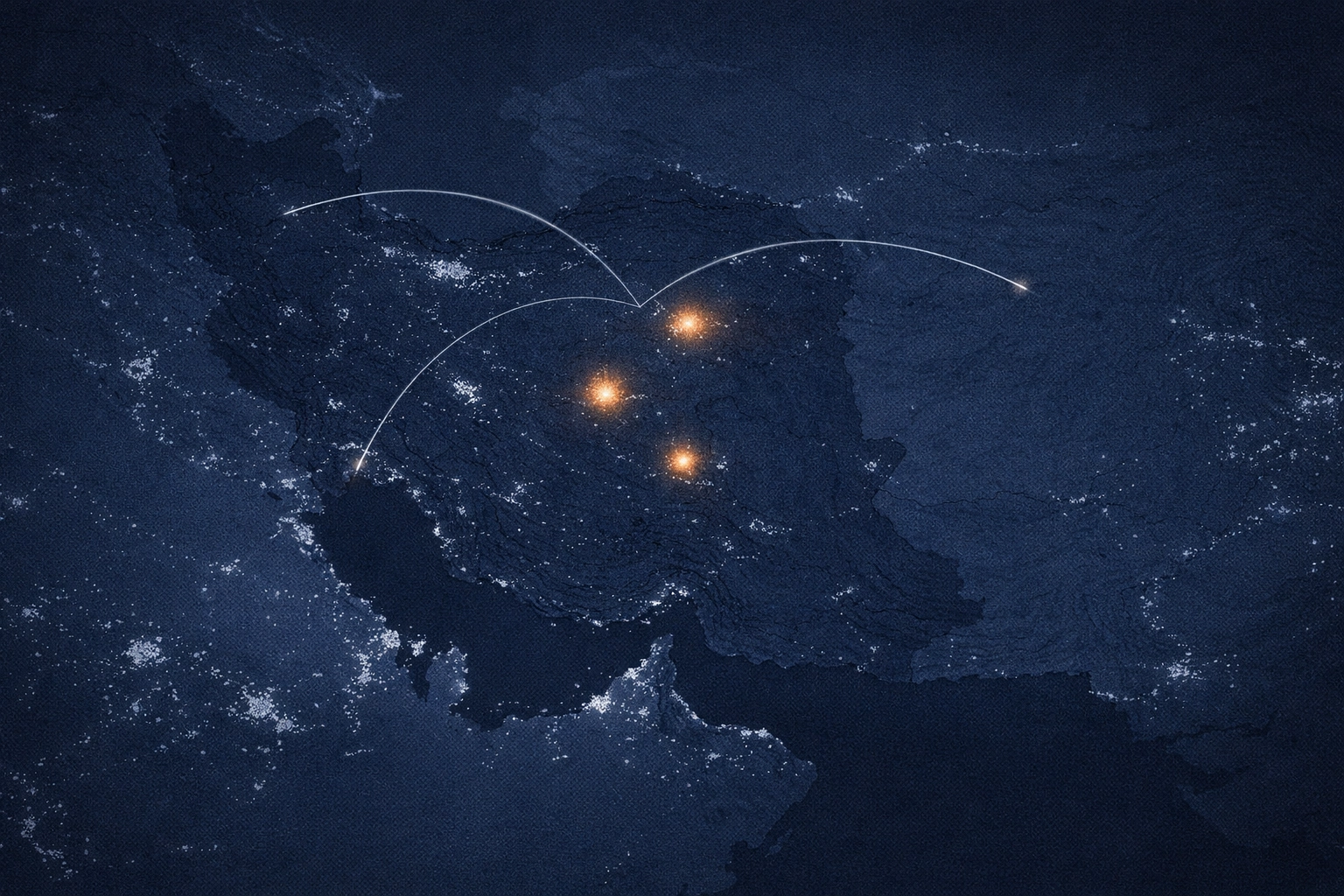
The military engagement began in the early hours of February 28. According to reports from the Pentagon and the IDF, the strikes were comprehensive, targeting command and control centers, nuclear research facilities, and ballistic missile silos. Major impacts were recorded in Tehran, Isfahan, Qom, Karaj, and Kermanshah. The scale of the bombardment suggests a strategic attempt to dismantle Iran’s retaliatory capacity in a single window of engagement.
The human toll is devastating. Early estimates from local medical authorities and international observers indicate that more than 200 people have been killed in the initial waves. Among the high-ranking casualties confirmed by state media are Mohammed Pakpour, a senior commander within the Islamic Revolutionary Guard Corps (IRGC), and Amir Nasirzadeh, the Iranian Defense Minister. Unconfirmed reports continue to circulate regarding the status of Supreme Leader Ali Khamenei, though no definitive proof of his condition has been provided by independent sources.
Retaliation was nearly instantaneous. Iran launched a barrage of more than 35 ballistic missiles and a swarm of kamikaze drones targeting U.S. assets and Israeli population centers. These strikes extended into the broader Persian Gulf, impacting military installations in Jordan, Kuwait, Bahrain, Qatar, Iraq, Saudi Arabia, and the United Arab Emirates. Significant damage was reported at Kuwait International Airport’s Terminal 1, and injuries were sustained at Dubai International Airport. The Red Sea has also seen a resurgence of activity, with Houthi rebels announcing a resumption of attacks on any vessels flagged by the U.S. or Israel.
Beyond the military targets, the fog of war has claimed civilian lives. A particularly tragic report indicates that an Israeli airstrike hit a school in Minab, Iran, resulting in the deaths of over 60 students. This event has become a focal point for international condemnation and highlights the horrific reality of modern urban warfare.
The Perspectives: A Divided Global Stage
The rationale behind the escalation varies depending on the capital from which the statement is issued. In Washington D.C. and Jerusalem, the narrative is one of preemptive security. Leaders cite a "red line" crossed regarding Iran’s nuclear program and its continued support for proxy groups that have destabilized the region for decades. From this perspective, "Operation Epic Fury" was not an act of war, but an act of prevention: a necessary measure to stop a larger, nuclear-armed conflict before it could begin.
Tehran offers a starkly different view. Iranian officials have characterized the strikes as "unprovoked aggression" and a blatant violation of international law. They argue that their sovereign territory has been invaded by "Western imperial interests" and that their retaliation is a legitimate exercise of self-defense. This perspective is echoed in part by Moscow and Beijing. Russia has officially termed the strikes a "pre-planned act of armed aggression," while China has expressed deep concern for Iran’s territorial integrity, calling for an immediate end to the violence.
In the middle sits the United Nations. Secretary-General António Guterres has convened an emergency session of the Security Council, warning that the Middle East is on the "edge of a catastrophe" that could engulf the entire planet. The U.N. is calling for an immediate ceasefire, though consensus remains elusive as veto-holding members of the council find themselves on opposite sides of the firing line. European nations, led by France, Germany, and the UK, are currently focused on emergency evacuations of their citizens from the region, fearing a prolonged conflict.

The Eternal Center: Peace Beyond Understanding
As an organization rooted in the Assemblies of God faith, we look at these events through a lens that extends beyond the geopolitical. We believe that every life lost: whether in a Tehran command center or a Minab classroom: is a life known and loved by God. In times of war, the human heart naturally gravitates toward fear, anger, or a desire for retribution. However, we are called to a different response.
We lean into the core values of our faith: the necessity of Salvation, the comfort of the Holy Spirit, the hope of Divine Healing for the wounded, and the sobering reality of the Second Coming of Christ. These events serve as a reminder that the systems of this world are fragile and that our ultimate peace cannot be found in military dominance or political treaties. True peace is a person.
The scripture that anchors us today is Philippians 4:7: "And the peace of God, which transcends all understanding, will guard your hearts and your minds in Christ Jesus."
This "transcendent peace" is not the absence of conflict; it is the presence of God in the midst of it. It is a peace that allows a believer to remain calm when the headlines are screaming. It is a peace that empowers us to pray for our enemies and to seek the welfare of the innocent. When we say this peace "guards" our hearts, we use a military term: God’s peace stands as a sentry over our emotions, preventing the chaos of the world from dictating our internal state.
As we process the news of "Operation Roaring Lion" and the subsequent retaliation, our response must be one of intercession. We pray for the leaders of nations, that they would be granted wisdom that leads to life rather than death. We pray for the families in Iran, Israel, and the Gulf states who are currently huddled in shelters. We pray for the service members on all sides, many of whom are caught in the machinery of decisions made far above their rank.

Practical Steps for a Peace-Centered Life
In the face of such massive escalation, it is easy to feel helpless. However, the McReport philosophy encourages practical peace. First, limit your consumption of sensationalist media. The "halftone" of truth is often found in quiet reflection rather than loud commentary. Second, engage in your local community. When the world feels out of control, re-establishing order and kindness in your immediate circle is a powerful act of spiritual resistance. Third, keep your eyes on the eternal. The struggles of 2026 are significant, but they are held within the hands of a God who is the same yesterday, today, and forever.
We are living in a moment that requires "pastor’s newsroom" thinking: reporting the truth without cruelty and maintaining conviction without contempt. We do not need more tribal energy; we need more Christ-centered clarity. As this story develops, we will continue to provide updates that prioritize facts and faith over fear and fury.
The Middle East is at a crossroads, and so is the global heart. Let us choose the path of the Peacemaker, even when the world chooses the path of the sword. We trust that the God of all comfort is near to the brokenhearted today, and we stand ready to support our readers as we navigate these turbulent waters together.
Need prayers? Text us day or night at 1-901-213-7341.
Follow at LayneMcDonald.com for calm updates as this story develops. For those seeking deeper guidance on how to lead with a God-centered heart during global crises, mentoring resources are available on the site.
Source: AP, Reuters.

$50
Product Title
Product Details goes here with the simple product description and more information can be seen by clicking the see more button. Product Details goes here with the simple product description and more information can be seen by clicking the see more button

$50
Product Title
Product Details goes here with the simple product description and more information can be seen by clicking the see more button. Product Details goes here with the simple product description and more information can be seen by clicking the see more button.
$50
Product Title
Product Details goes here with the simple product description and more information can be seen by clicking the see more button. Product Details goes here with the simple product description and more information can be seen by clicking the see more button.
Comments