Wall Street's New Horizon: Dow 50,000 Milestone
- Dr. Layne McDonald
- Feb 8
- 5 min read

The Facts
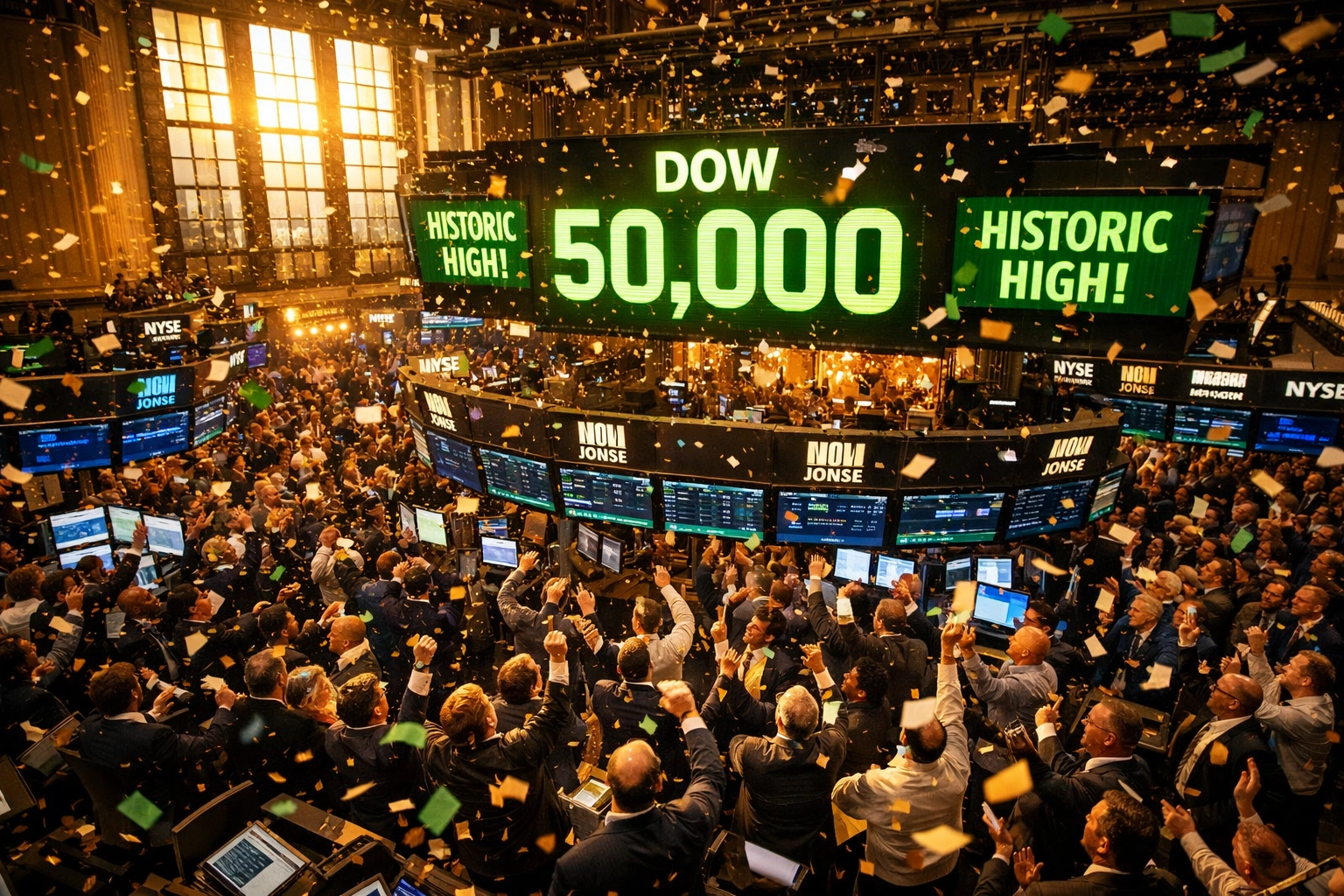
On February 6, 2026, the Dow Jones Industrial Average crossed the 50,000-point threshold for the first time in history, closing at 50,115.67. The index surged 1,206.95 points: a 2.5% gain: marking one of the sharpest single-day rallies in recent memory.
The milestone came after a turbulent week that saw software stocks plunge and bitcoin suffer a severe selloff, rattling investor confidence. But by Friday, the market rebounded with force. The S&P 500 finished 2% higher, and the Nasdaq Composite rose 2.2%.
The journey from 40,000 to 50,000 took just 431 trading days: the fastest 10,000-point climb between such milestones on record. Leading the charge were heavyweight stocks including Nvidia, which jumped nearly 8%, alongside Caterpillar, 3M, Amgen, and Goldman Sachs.
How it Happened
This historic surge didn't materialize out of thin air. The momentum has been building for months, fueled primarily by the artificial intelligence revolution reshaping the tech landscape. Companies heavily invested in AI infrastructure and services have seen their valuations soar, pulling the broader market upward.
The week leading to the milestone was anything but smooth. Early trading days saw sharp declines in software stocks and a cryptocurrency crash that sparked fears about deteriorating risk appetite across markets. Many analysts worried investors would flee equities altogether.
Instead, something different happened. By Friday, market participants rotated their capital back into established blue-chip stocks: the household names that have weathered economic storms for generations. This wasn't panic. It was a calculated shift toward stability.
Nvidia's nearly 8% jump reflected Wall Street's continued faith in the AI boom. The chipmaker has become synonymous with the infrastructure powering everything from chatbots to autonomous vehicles. Meanwhile, industrial stalwarts like Caterpillar signaled confidence in the real economy: the world of construction, manufacturing, and physical goods.
Wells Fargo's senior global market strategist Scott Wren raised his firm's real GDP growth forecast to 2.9%, citing an accelerating economy. Fiscal stimulus, tax cuts, business incentives, and massive AI investment have combined to drive corporate earnings higher.

Where We Are Now
Despite reaching this psychological milestone, the market faces significant crosscurrents. Global trade tensions continue to simmer beneath the surface. Tech sector volatility remains a persistent concern, with regulators scrutinizing AI companies and data privacy practices more aggressively.
Yet investor confidence in the U.S. economy's resilience appears surprisingly robust. The Friday rally demonstrated that when fear strikes, institutional money still flows toward American blue chips rather than rushing for the exits.
Market breadth tells an interesting story. While the Dow captured headlines, strategists remind us that broader indices like the S&P 500 offer a more complete picture of market health. The concentration of gains in a handful of mega-cap tech stocks means the "average" stock hasn't participated equally in this rally.
Economists project continued growth through 2026, though at a potentially decelerating pace. The Federal Reserve's monetary policy stance, inflation data, and corporate earnings reports in coming quarters will determine whether 50,000 becomes a floor or a ceiling.
The Conversation
The 50,000 milestone has sparked predictably divergent reactions across the financial world.
Bulls celebrate this as confirmation of American economic exceptionalism and technological supremacy. They point to innovation cycles, productivity gains from AI, and strong corporate balance sheets as evidence that the market has room to run. To them, this is the beginning of a new era where technology fundamentally reshapes productivity and prosperity. They argue that pessimists have consistently underestimated America's capacity for reinvention.
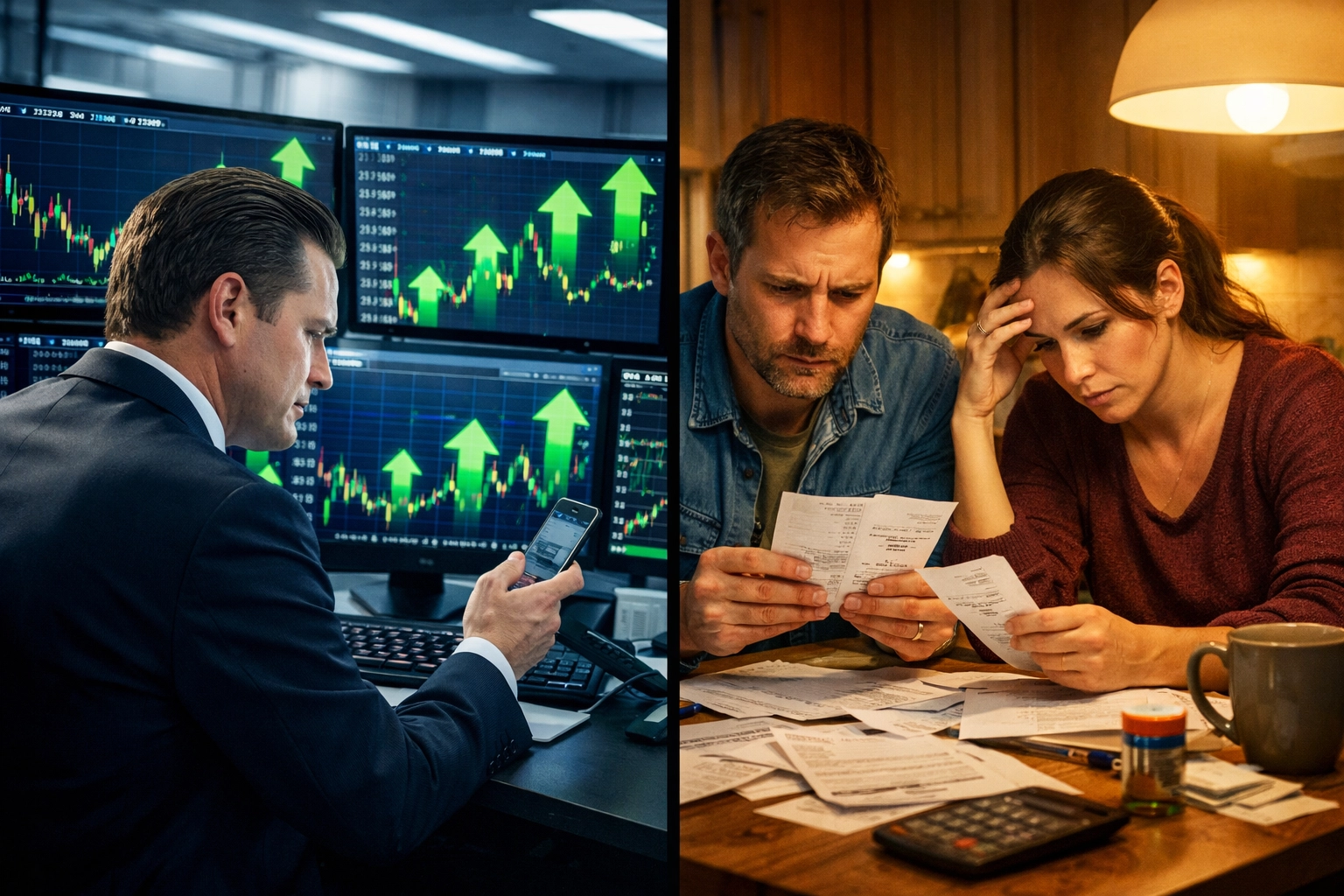
Bears counter with sobering questions. They warn of an "AI bubble" reminiscent of the dot-com mania, where speculation outpaces fundamental value. They note the growing disconnect between soaring stock indices and the economic reality facing average families: grocery bills climbing, housing costs surging, wages lagging behind inflation.
Critics ask: If the economy is so healthy, why do so many households feel left behind? The wealth effect from rising stocks accrues primarily to those who own substantial equity portfolios: a minority of Americans. For millions, the Dow hitting 50,000 feels as relevant as news from another planet.
Some economists caution that concentrated gains in a handful of tech giants create fragility. If sentiment shifts on AI's near-term profitability, the reversal could be swift and severe. Others worry about valuation metrics that look stretched by historical standards, suggesting limited upside and significant downside risk.
Both perspectives contain truth. Markets can be simultaneously expensive and still climb higher. Economic expansion can coexist with household financial stress. These aren't contradictions: they're the messy reality of a complex, unequal recovery.
The Biblical Center
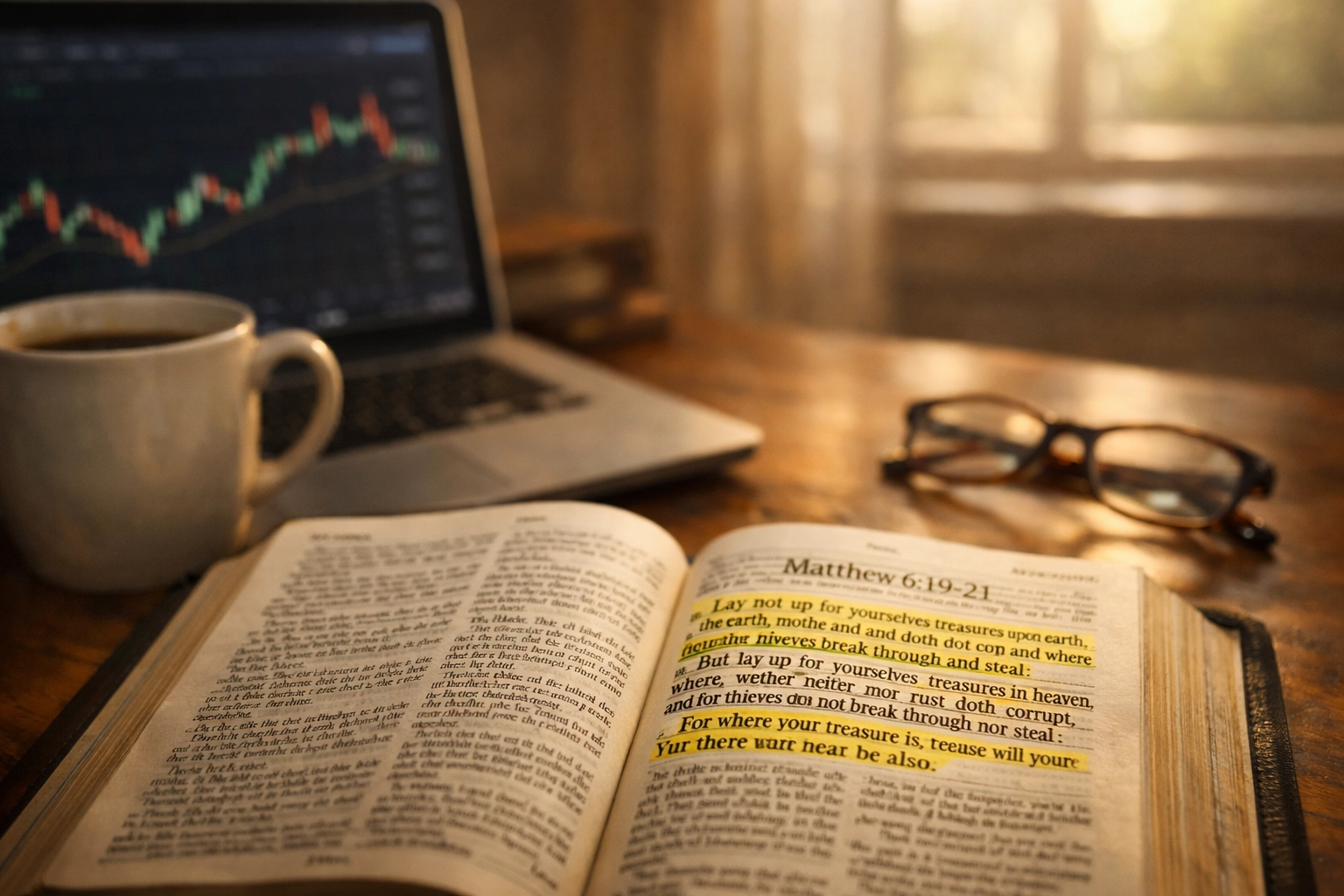
I'm Dr. Layne McDonald, and I'll be honest: when I saw that 50,000 flashing across the screen, my first thought wasn't celebration. It was Matthew 6:19-21.
"Do not store up for yourselves treasures on earth, where moths and vermin destroy, and where thieves break in and steal. But store up for yourselves treasures in heaven, where moths and vermin do not destroy, and where thieves do not break in and steal. For where your treasure is, there your heart will be also."
We are so easily mesmerized by numbers on screens: these digital representations of value that can vanish with a single headline, a tweet, a geopolitical shock. The Dow climbed 10,000 points in 431 days. It could lose 10,000 points just as fast.
I'm not anti-market or anti-wealth. I'm grateful when the economy hums along and retirement accounts grow. But here's what concerns me: How many of us check our portfolios more often than we pray? How many of us feel peace when stocks rise and anxiety when they fall, as if our security hinges on these fluctuations?
As Christians, our true "Dow" isn't measured in points. It's measured in the unchanging character of a King whose economy never crashes, whose promises never default, whose love never corrects downward.
The danger isn't prosperity: it's making prosperity our foundation. When we do that, we build our lives on something as stable as market sentiment, which is to say, not stable at all. God calls us to a different kind of security, one that doesn't fluctuate with economic data or corporate earnings reports.
I'm thankful for a stable economy. But I'm infinitely more thankful for an unshakable Savior. That distinction matters more than we often admit.
Finding Peace
Here's your practical assignment today, whether your portfolio grew yesterday or not:
Don't let your mood rise and fall with the market. Take ten minutes this morning to thank God for His provision: not just financial provision, but the daily bread, the air in your lungs, the people around you. Gratitude reorients our hearts toward what actually sustains us.
If you've been blessed by this market milestone, consider quietly helping a neighbor still struggling with inflation. Maybe it's covering a grocery bill, helping with rent, or simply sharing a meal. These acts don't make headlines, but they change lives. That's how we keep the peace up: not by celebrating numbers, but by extending mercy to those who need it most.
And if you're one of the millions for whom 50,000 feels meaningless because you're just trying to make ends meet, hear this: Your worth isn't measured by net worth. God sees you, knows your struggle, and hasn't forgotten you. The Kingdom economy operates on different metrics: faithfulness, generosity, love: and you're probably richer than you realize.
Check your heart before you check your portfolio today. That's where real wealth lives.
Source: CNN Business, CNBC, Wells Fargo Investment Institute market analysis (February 6, 2026)
Sonny-Ready Caption Block:
The Dow just hit 50,000. 📈 It's a historic moment, but where is your true anchor? Dr. Layne McDonald breaks down the milestone with a biblical lens on finding peace in an unpredictable economy. Read more: www.laynemcdonald.com #McReport #Dow50k #ChristianPerspective #PeaceNotPanic
Comments