
Anchoring the Next Generation: Teaching Theology in a Digital World
- Dr. Layne McDonald
- Mar 20
- 5 min read

"Train up a child in the way he should go, and when he is old he will not depart from it" (Proverbs 22:6). These words have echoed through Sunday school hallways for generations. But as we sit here in March 2026, the "way he should go" now includes navigating a digital landscape more complex than anything we could have imagined just a decade ago.
Teaching theology to children today isn't just about memorizing verses; it’s about anchoring their souls in an era of digital drift. At The McReport, we believe that education and faith must walk hand-in-hand to prepare our kids for a world that is constantly online but often spiritually offline.
The Facts: Discipleship in 2026
The landscape of children's ministry has shifted dramatically over the last few years. We are no longer talking about "screen time" as a separate category of life; for the next generation, digital life is life. According to current 2026 trends, the most successful children’s ministries have moved toward a "hybrid" model. This isn't just about streaming a service; it's about integrated, interactive discipleship.
Research shows that digital engagement offers a massive reach. Young believers are using platforms like TikTok and interactive apps to share testimonies and engage in spiritual discussions. However, this accessibility comes with a cost: information overload. Without a strong theological foundation, children are vulnerable to "spiritual fatigue" and doctrinal confusion caused by the unfiltered stream of content they consume daily.
In 2026, we are seeing the rise of "Digital Mentorship." Churches are now pairing older mentors with younger learners through secure apps for weekly check-ins. These aren't just social chats; they are focused on Bible reading and applying the Word to the specific challenges of 2026: like AI ethics, digital bullying, and maintaining a Christian identity in a virtual space.
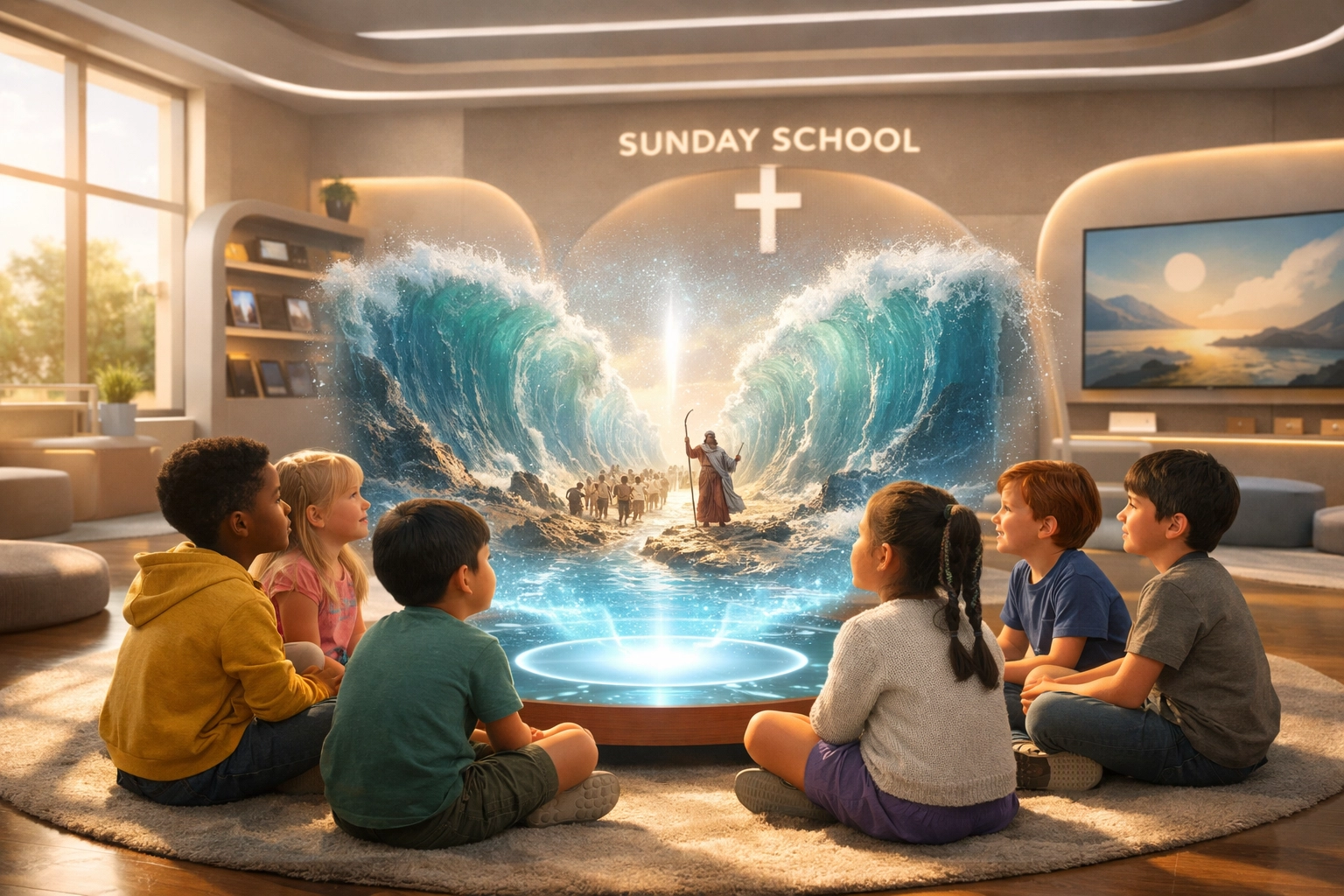
Furthermore, gamification has become a standard tool in theological education. Interactive platforms that allow children to "journey" through the Tabernacle or "witness" the Day of Pentecost in a virtual environment have led to a 40% increase in participation among Gen Z and Gen Alpha. The goal isn't entertainment; it's immersion. By making the stories of the Bible interactive, we are helping children move from being passive observers to active participants in the narrative of God's Kingdom.
The Biblical Lens: A Timeless Command in a Wired World
While the tools have changed, the mandate has not. In the book of Deuteronomy, we find the core strategy for spiritual formation:
"And these words which I command you today shall be in your heart. You shall teach them diligently to your children, and shall talk of them when you sit in your house, when you walk by the way, when you lie down, and when you rise up" (Deuteronomy 6:6-7).
In a Pentecostal worldview, this "walking by the way" now includes the digital highway. We believe in the baptism of the Holy Spirit and the power of God to transform lives, and that transformation must extend to our digital presence. Teaching theology to a child isn't just about passing on facts; it's about inviting them into an encounter with the living God.

We see this as a holistic process. Whether a child is looking at a physical Bible or a holographic study aid, the goal is the same: to have the Word of God "in your heart." As an Assemblies of God community, we emphasize that the Holy Spirit is our primary Teacher. Technology is simply the conduit. We teach our children that the same Spirit who moved on the Day of Pentecost is available to them today, guiding their thumbs as they scroll and their hearts as they post.
Balanced Viewpoints: The Great Debate
There is an ongoing conversation in the Church regarding how much "digital" is too much.
On one side, there are those who advocate for traditional, "analog" teaching. They argue that the physical presence of a teacher, the tactile feel of a Bible, and the face-to-face interaction of a classroom are irreplaceable. They worry that digital tools, no matter how clever, can lead to a shallow, "entertainment-first" faith that lacks the weight of true discipleship.
On the other side, proponents of digital engagement argue that if we aren't where the children are, we aren't fulfilling the Great Commission. They see VR Bible studies and AI-driven theology tutors as modern-day parables: using the language of the people to reach the people.

Then there is the question of responsibility: Who is the primary educator? Traditionally, the church was seen as the "expert" in theology, while parents provided the "support." In 2026, that dynamic is flipping. With digital tools available 24/7, the home has become the primary site of theological formation, with the church acting as a resource hub and community anchor.
A balanced approach recognizes that while technology provides the tools, the family provides the testimony. A digital app can teach a child the names of the twelve apostles, but a parent’s life shows them what it looks like to follow Jesus through a trial. We need both: the technical reach of the digital age and the relational depth of the local church.

The Response: Moving Toward Maturity
As we navigate this, we must emphasize "critical media literacy" for our children. They need to be taught how to evaluate the spiritual content they see online. Does this post align with Scripture? Does this "influencer" reflect the fruit of the Spirit?
Teaching theology in a digital world means giving children a "theological filter." We want them to be so grounded in the truth of God’s Word: His nature, His plan for salvation, and the promise of His Second Coming: that they can spot a counterfeit from a mile away.
We aren't just teaching them to be good kids; we are training them to be digital missionaries. We want them to see their devices not as toys, but as tools for the Kingdom.
As the Apostle Paul wrote to Timothy: "And that from childhood you have known the Holy Scriptures, which are able to make you wise for salvation through faith which is in Christ Jesus" (2 Timothy 3:15).
This wisdom is our goal. Whether it comes through a printed page or a high-definition screen, the "Holy Scriptures" remain the only foundation that can withstand the shifting sands of culture.
A Calm Next Step
The digital world can feel overwhelming, but discipleship usually happens in the small, quiet moments. You don't need a degree in theology or a background in software engineering to make an impact today.
Your Challenge: Spend 10 minutes today talking to a child in your life about God. It doesn't have to be a sermon. Ask them what they’ve been thinking about lately, or share a way you saw God move in your own life this week. Just 10 minutes of intentional, focused conversation can be the anchor they need.
If we want the next generation to be anchored in the truth, we have to be the ones holding the rope.
Need prayers? Text us day or night at 1-901-213-7341.
For more insights on how faith intersects with our changing world, visit our News and Politics category hub.
Source:Research inspired by Virginia Theological Seminary, Grace Theological Seminary, and recent studies on Gen Z spiritual engagement (2025-2026).
Comments